Vocabulary for real interests
Create boards around favorite topics, familiar routines, relationships, places, and ways of expressing more than basic needs.
AAC and autism
If you are exploring AAC with an autistic child or adult, begin with how that person already communicates—not assumptions attached to the diagnosis. Ollie provides symbol-based boards and speech output on iPhone or iPad. The person’s language, sensory experience, motor access, interests, and preferences should determine whether the system fits.
How Ollie may help
Create boards around favorite topics, familiar routines, relationships, places, and ways of expressing more than basic needs.
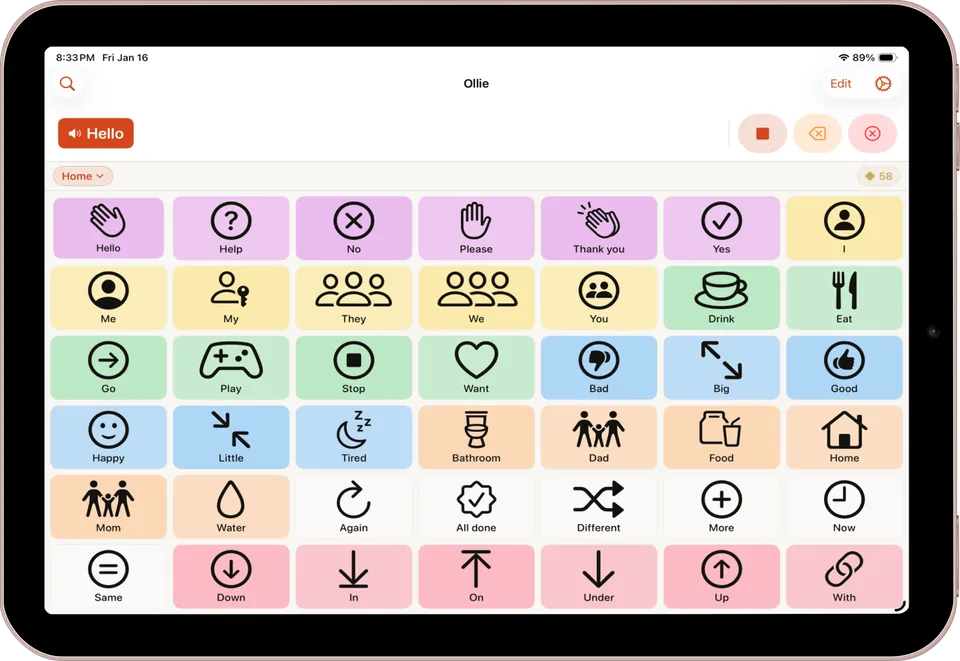
Use grid-based boards, categories, and Fitzgerald Key colors, while keeping learned vocabulary locations stable.
Tap symbols and words to build and speak a message when using the app is the communicator’s preferred option.
Use it thoughtfully
Before choosing
Important: Ollie does not treat autism or guarantee communication outcomes. It is one AAC option to compare based on the person’s access, language, and preferences.
Common questions
No. Some autistic people do not need AAC, and people who do use AAC have different access and language needs. Ollie should be evaluated as one possible tool.
Yes. Supporters can create and edit boards for specific interests, routines, people, and upcoming events.
AAC is a way to support communication and can be used alongside speech and other methods. Individual guidance should come from a qualified professional familiar with the communicator.
Start with a favorite activity or everyday routine. Make a board together and see whether Ollie makes it easier to share wants, feelings, and ideas.