Recognizable vocabulary
Use symbols, photos, and words connected to the communicator’s actual people, routines, interests, and environments.
AAC and Down syndrome
If you support a person with Down syndrome, build from that individual’s strengths, preferences, and existing ways of communicating. Ollie can provide customizable visual boards and speech output alongside speech, signs, gestures, facial expression, or writing. The diagnosis itself does not tell a family or school which AAC system will fit.
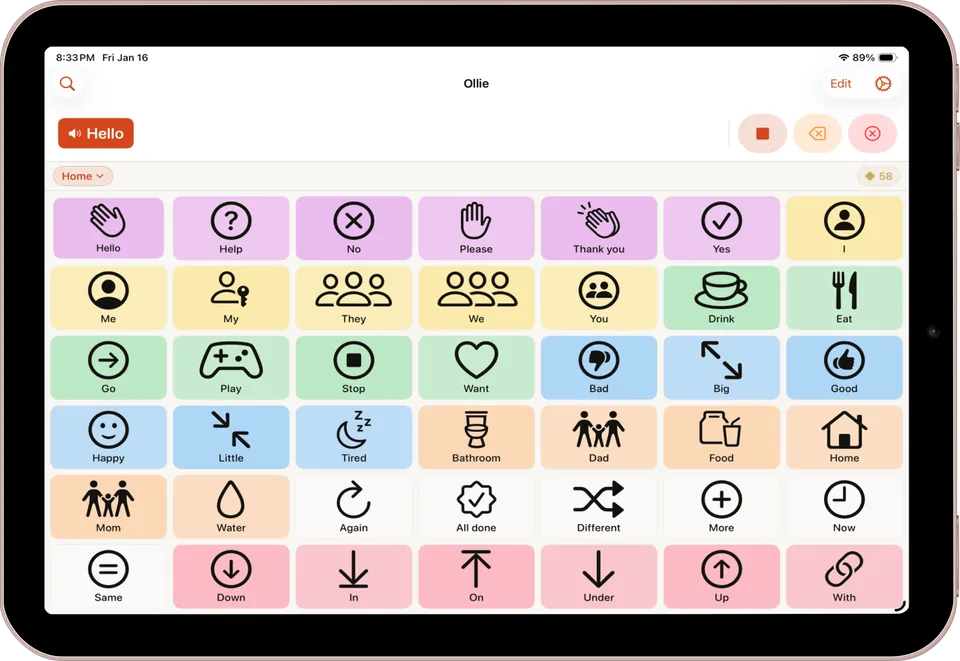
How Ollie may help
Use symbols, photos, and words connected to the communicator’s actual people, routines, interests, and environments.
Create access to comments, questions, social language, choices, refusals, feelings, and personal topics.
Add vocabulary and reorganize content as the communicator’s interests, settings, and needs change.
Use it thoughtfully
Before choosing
Important: Ollie does not treat Down syndrome or promise language development. It is one communication tool that should be considered in the context of the individual.
Common questions
Yes. AAC can be one part of a person’s multimodal communication.
Yes. Supporters can use photos for custom buttons when those images are meaningful and appropriate.
No. Vocabulary, layout, access, and support should be individualized.
Start with recognizable people, routines, interests, comments, and choices—then adjust it with the communicator.